20 Oct 2022

Winter birds arriving at Mai Po

 On a clear and cool morning at Mai Po Nature Reserve, I joined the (mostly senior) photographers in hide number one.


With the sun behind us and a lot of newly arrived winter visitor birds in front, there was plenty to look at.


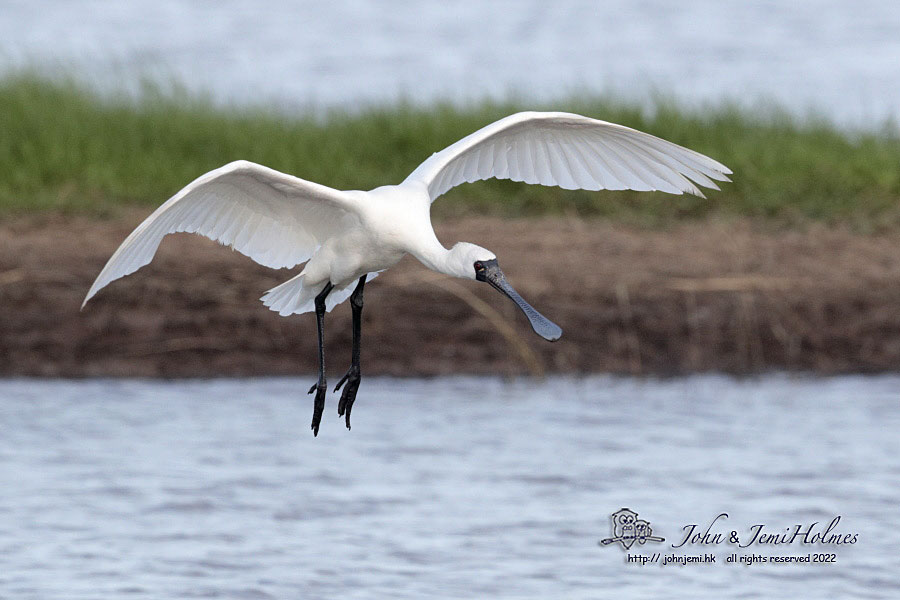
Most notably, there were at least 24 Eurasian Spoonbills among the spoonbill flock of just over 100 birds; - the rest being Black-faced Spoonbills, normally by far our commonest spoonbill.


Eurasian Spoonbill (eight in this view, with Black-faced)


Eurasian Spoonbill


In fact, I’ve never seen more than five Eurasian Spoonbills at one time at Mai Po before… so I wonder if this influx was due to the dryness of Po Yang this autumn, where Eurasian far outnumbers Black-faced.


Black-faced Spoonbill

It will be interesting to see if any other Yangtse/Po Yang wintering waterbirds arrive here in the next month or so.


Other winter birds included duck, - here are Garganey, Eurasian Teal and Shoveler.


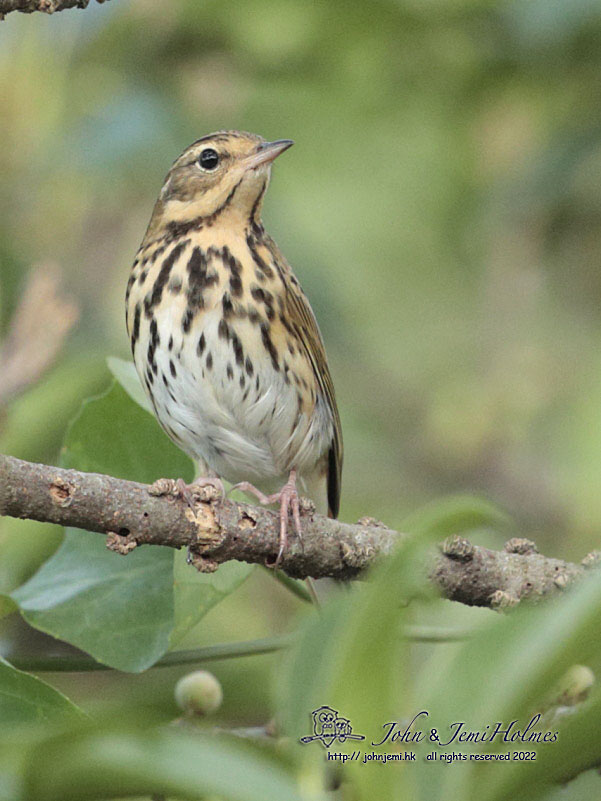
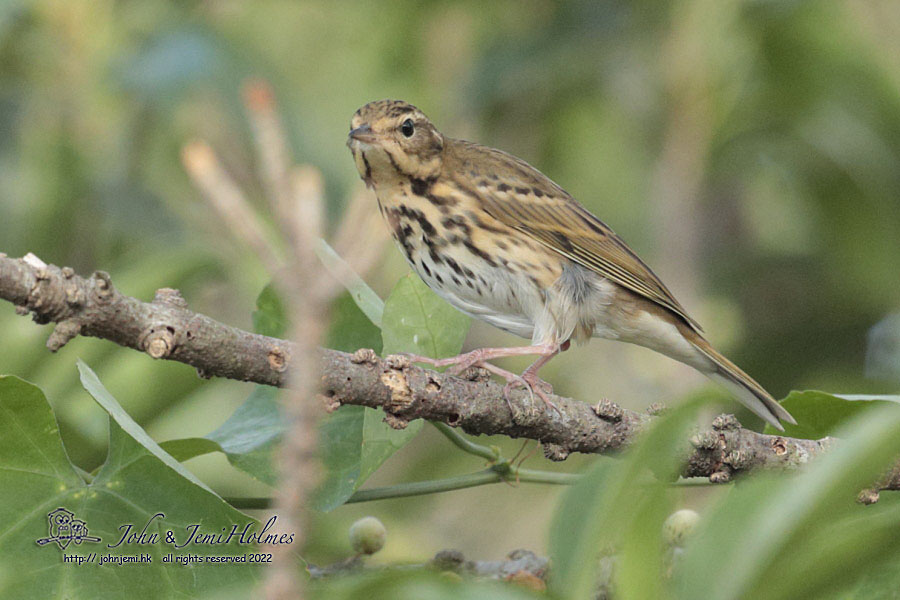
Olive-backed Pipits are newly-arrived, 


and this Spotted Eagle was my first of the season. 


(The Record high count for Eurasian Spoonbill was 30 on 14 March 1976) 


6 Aug 2022

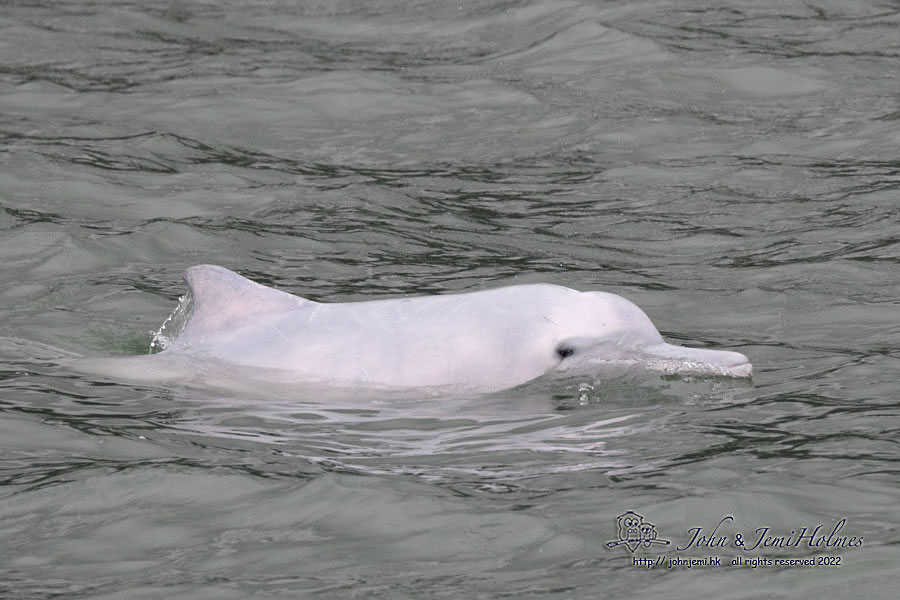
Chinese White Dolphins (Sousa chinensis) south of Lantau, Hong Kong - 4th August 2022


Hei Ling Chau and Lantau, HK

We joined a southern waters boat trip on August 4th, with a plan to go to the far western tip of Lantau Island to look for Chinese White Dolphins (Sousa chinensis), and look for seabirds along the way.

Much rain seemed likely due to a passing Tropical Depression but umpteen stalwarts turned up to board the hired vessel at Aberdeen Public Pier at 07:15.


As things turned out much of Hong Kong got a soaking, but rain was light for us during our eight hours on the water. 


The “Pink Dolphin” was a symbol of the HK handover, but the local population has suffered a severe 21st century decline due to intense boat activity in Hong Kong’s western waters, made worse by construction of the HK-Zhuhai-Macau causeway and the HKIA Third Runway.


We found a small pod of dolphins - seven or eight, perhaps - close to the Lantau shoreline. 


Chinese White Dolphin (Sousa chinensis)


On the way back to Aberdeen we encountered three or four small parties of Finless Porpoises (Neophocaena phocaenoides).


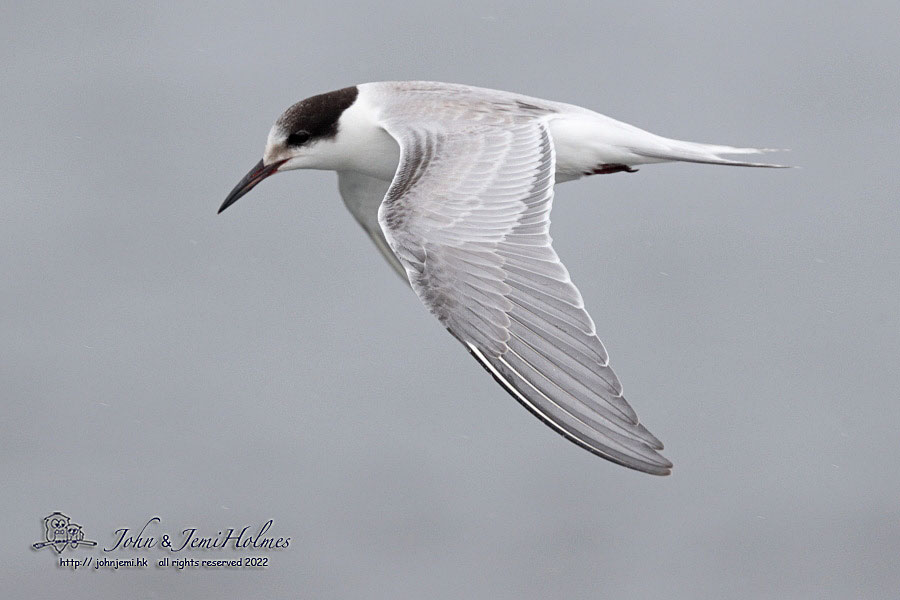
We had seen a few distant Bridled Terns earlier on, but when we passed the Soko Islands on the way to Lantau the breeding population of Roseate Tern (Sterna dougallii) on the Sokos was well-represented among the dozen-or-so birds that pursued the boat from time to time. 


Inevitably in summertime, there were plenty of Black-naped Terns (Sterna sumatrana) around too. 


A grand day out !


3 Aug 2022

Hong Kong’s three species of breeding tern from the Ma Liu Shui - Wong Shek Ferry - 2nd August 2022

An afternoon ferry trip this time, in hot and clear conditions. We left Ma Liu Shui (15 minutes stroll from MTR: Chinese University) at 15:00hrs.

There were about twenty photographers on board, soon lined up at the rear of the boat.


The “Tern Action” really peaked between Tap Mun and Chek Keng with 120 or more Black-naped Terns, a few Bridled Terns, and one or two Roseate Terns following the ferry.

All shots taken with the “Canon classic” 400mm 5.6 lens and a 1Dx Mk 2.


10 Jul 2022

Wuyi Shan and Kuatun Village, Fujian Province, China - November 1986

Before the pandemic I think we took the ease of 21st-century Chinese travel for granted.


In the decade up to 2020, keen birders could fly direct from Hong Kong to Wuyi Shan’s airport in an hour, and make a weekend of looking for birds like Short-tailed Parrotbill and Cabots’ Tragopan. 


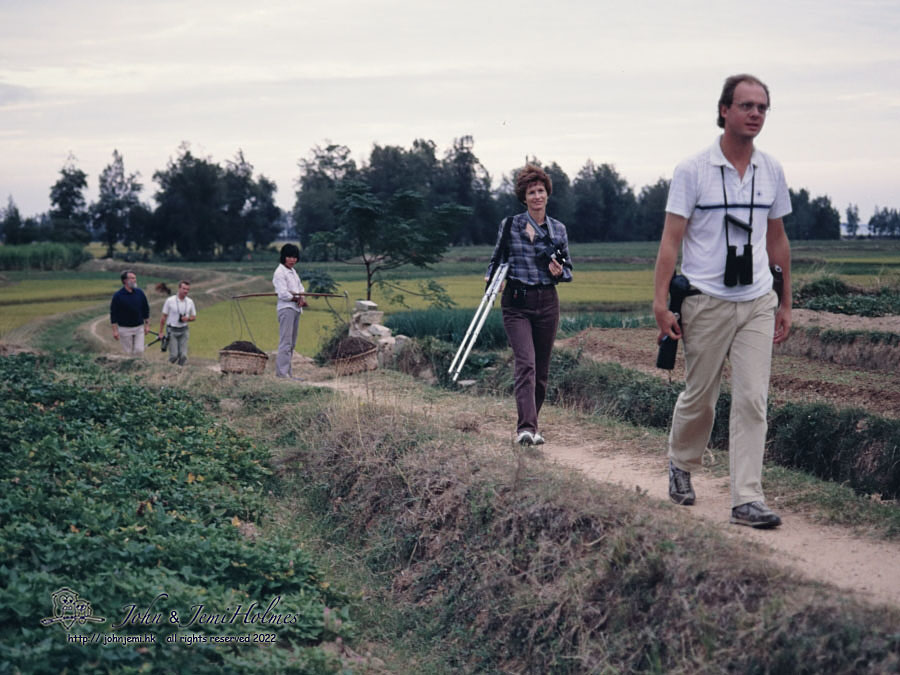
It wasn’t always so easy. In November 1986 I joined a trip jointly organised by WWF HK and the HKBWS. 


There had been an official invitation from the Fujian forestry Bureau, and Mary Hotung Ketterer, Executive director of WWF HK led our group. The birders included Peter Kennerley, Pete Stevens, Verity Picken and Stewart Smith.


It took us TWO DAYS to get to Kuatun Village, near Wuyi. But, just getting there was part of the adventure.


We sailed out of Hong Kong on one of the overnight ferries, heading north towards Xiamen.  Here we are, off the coast of eastern Guangdong, scoping Streaked Shearwaters. This was a species only added to the “HK List” in 1985, but known to be “out there” from earlier yachting and ferry reports.


The following morning, sea-birding was interrupted by the timeless spectacle of a flotilla of square-sailed fishing sampans.


We docked at the port of Xiamen (formerly Amoy), with a view of the old buildings of the pre-1930 British Concession Island of Gulangyu. 


With a day to spend in Xiamen, we birded the fields and coastline near the university area.


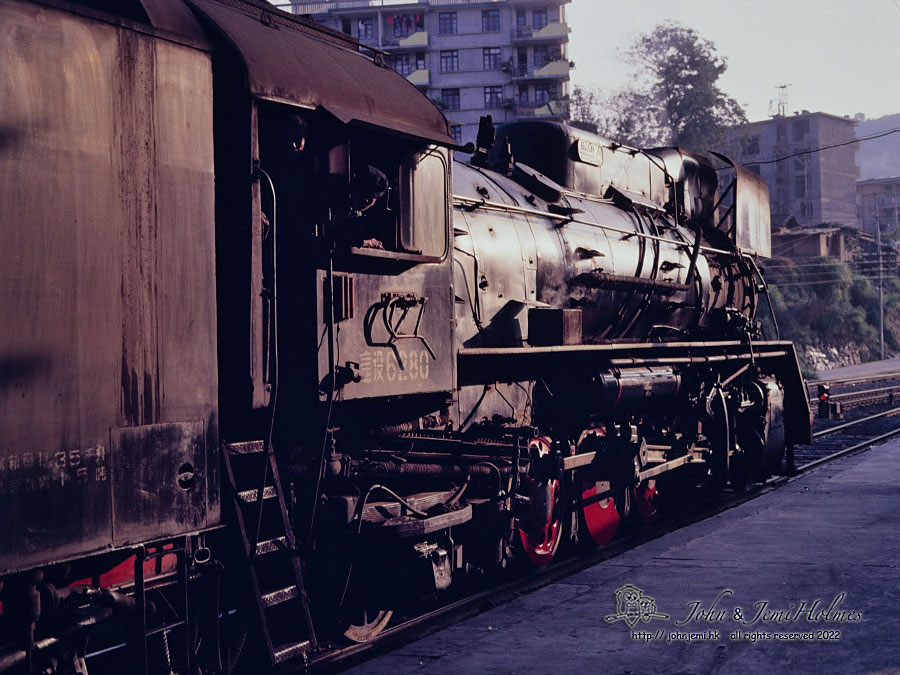
Then, overnight to Nanping (northeast Fujian) by train.  Our carriages were pulled out of Xiamen Station by this handsome Datong steam locomotive. 


We found that steam was alive and well in northern Fujian.
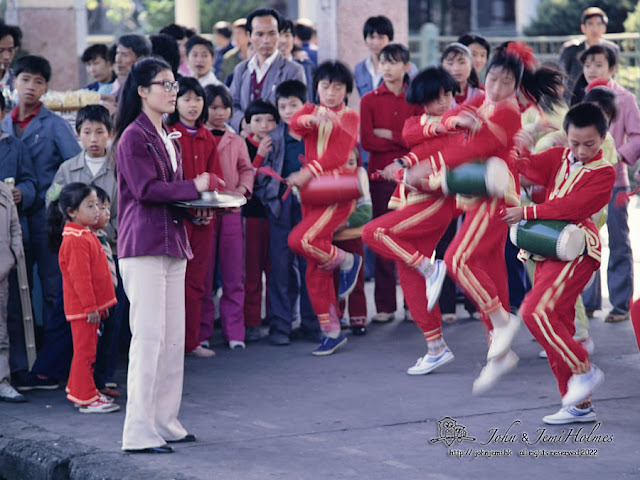


A welcoming dance performance on the station platform 

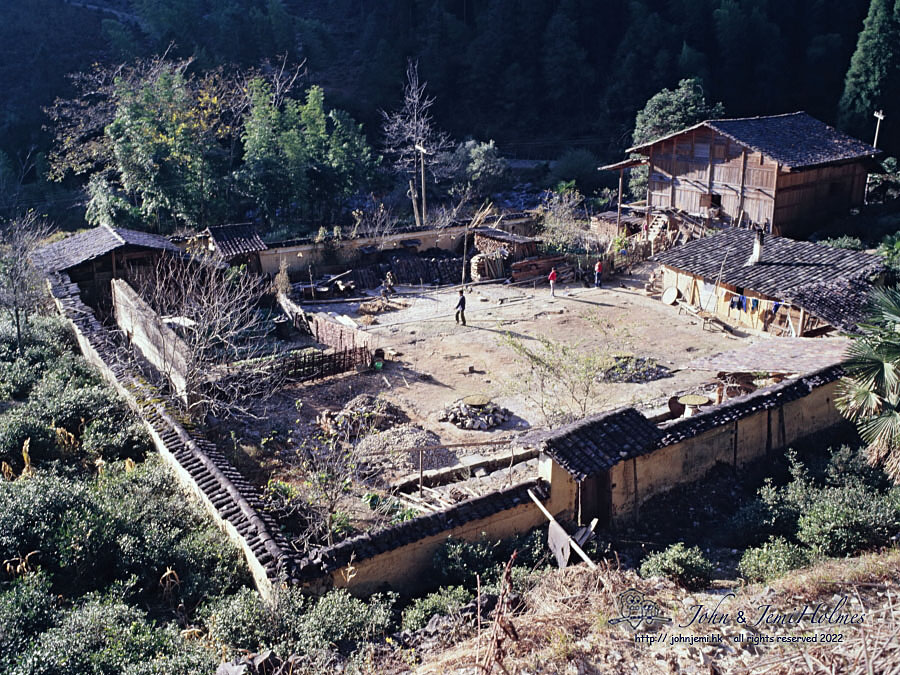
The village of Kuatun was the base for J D D LaTouche  (“A Handbook of the Birds of Eastern China”) in 1898, second only to Pere Armand David, who had been there in the autumn of 1873.


As a newbie birder this was this first place I ever saw Yellow-cheeked Tit and Speckled Piculet. My photographic efforts were centred on a 645 Bronica ETRS, so I had few “keepers” among my bird photos. 


The views along the road that followed the ridge that marks the boundary of Fujian and Jiangxi were spectacular. I revisited this road in 2007 with Lao Lin”, late bird guide from Nanchang (Jiangxi). 
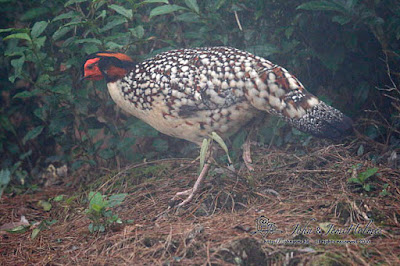

Cabot's Tragopan (T. caboti) - a nifty east China endemic, if ever there was one...


We spent the last couple of nights at the Wuyi Scenic area, popular with domestic tourists even then.


Another lengthy train journey took us to the provincial capital, Fuzhou. 

On the the 9th floor of our oh-so-modern hotel, we were woken by the swaying of the building. An earthquake.  After an hour of standing in the chilly car park, we disregarded some minor cracks in the plaster and went back inside.  (Happily for us, there were no serious injuries damage in Fuzhou, the quake epicentre was across the Taiwan Strait, near Taipei).


We caught an early morning flight back to HK, after a week packed with things to remember.